



 503 / 582

BETA Monitoring
Monitoring of Plants and Devices
5
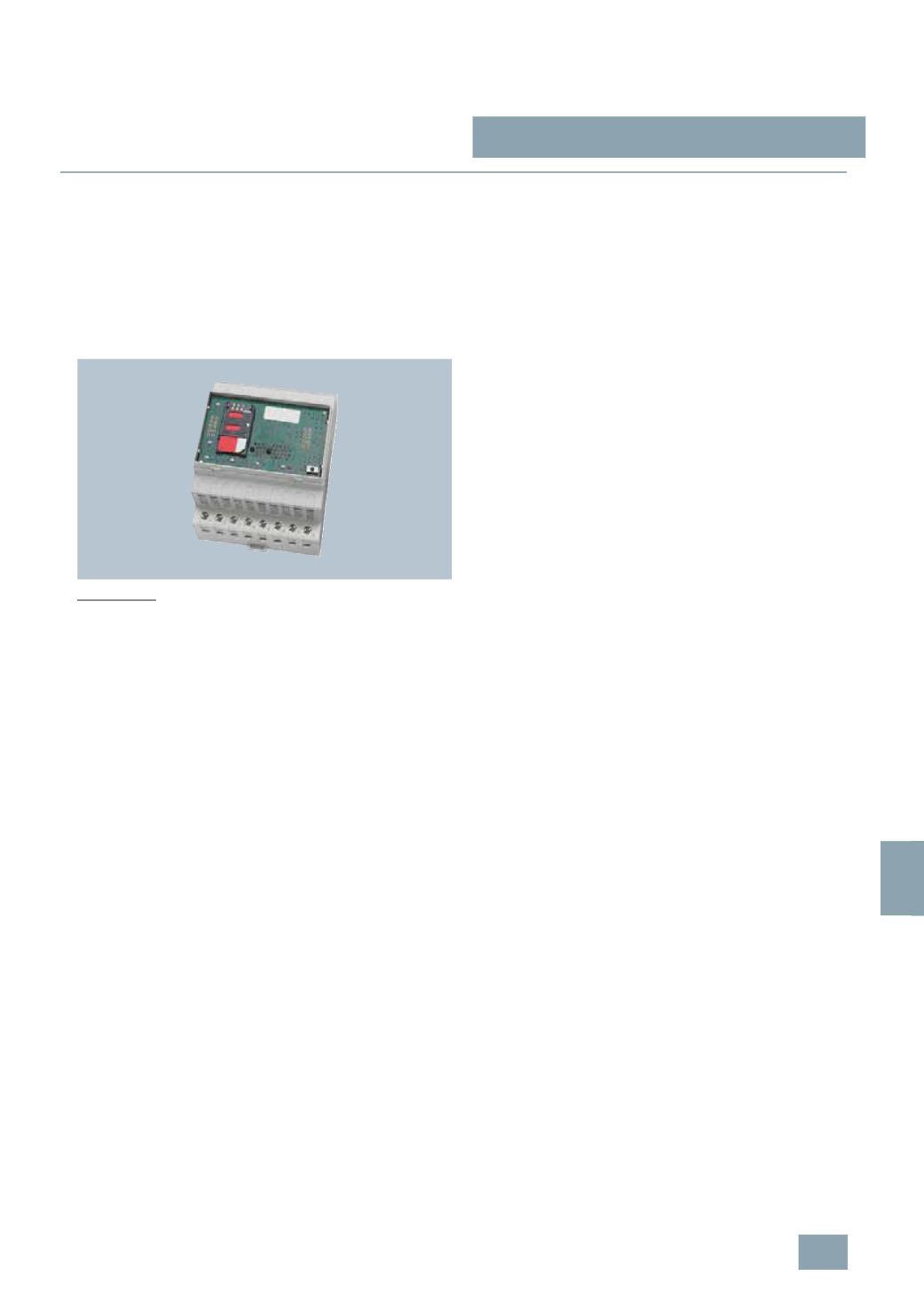
TT7 1 GSM alarm modules
14/7
Siemens ET B1 · 10/2008
14
■
More information
SIM card
An activated SIM card of a GSM network provider is used (e.g.
T-Mobile D1, Vodafone D2, E-Plus, O2 – even prepaid cards).
The card is prepared for use in the GSM alarm module in a
conventional cell phone, by setting the PIN to "1234". The device
can then be simply configured and put into service without any
software tools or programming skills. The status of two digital
inputs are monitored and in the event of any change, an SMS is
sent. By sending an SMS from a cell phone to the GSM alarm
module you can switch the output.
Administrator
One cell telephone number has administrator rights. This
administrator number is used to specify the signaling and
control texts, define time responses at outputs and inputs and
register and store up to 5 further phone numbers in the device.
An SMS alarm message is then also sent to these 5 phone
numbers in the event of a fault.
Freecall function
The freecall function is an extremely interesting feature and –
unlike the sending of SMS messages – completely free. It can be
used for the functions of the GSM alarm module. By simply
selecting the device, this function can be used to switch the
output, switch it over or call up the switching states of inputs and
outputs. The GSM alarm module detects the phone number that
is calling, checks the authorization and executes the desired
function. To use this function, the anonymous call feature must
be disabled on the phone being used.
Safety in the event of power failure
In contrast to the 5TT7 110-0 GSM alarm module, the 5TT7 120-0
version is also fitted with a backup battery. Any device power
failure is detected by the 5TT7 120-0 GSM alarm module. The
device then sends an appropriate alarm SMS and switches itself
off.
Status interrogation
A status SMS can be used to query the switching state of both
inputs and the output. If required, the freecall function can also
be used for this purpose.
Heartbeat function
The GSM alarm module automatically sends a status SMS at
user-definable intervals.
User-definable device name
In the devices, users can define their own device names. This
device name then prefixes each SMS. If more than one device is
in use, the user can clearly see where the alarm has occurred.
Power-On SMS
If required, the GSM alarmmodule automatically sends a so-called
Power-On SMS with device name and time delay after the system
is switched on. A time delay can be set for the inputs. If there is
a change in the device state, the alarm SMS is not sent until the
set delay time has expired.
Time delay
The adjustable delay time serves to suppress the sending of
multiple alarm SMS texts, e.g. in the case of chattering contacts.
This time is started after an alarm SMS is sent. No further SMS is
then sent within the set time interval.
Monoflop function
This allows a time to be set after which the output is automatically
reset to zero.
Password protection
If the password protection is activated, the password must be
entered as a prefix to each SMS. This protects against
unauthorized access.
Interrogation settings
All the settings of a device can be called up using a range of
SMS interrogations.
© Siemens AG 2008