



 210 / 336

Sensors
E58-Series
2010 CA08103002Z-EN
www.eaton.comOptical sensors
3/97
Optical sensorsE58-Series
Description
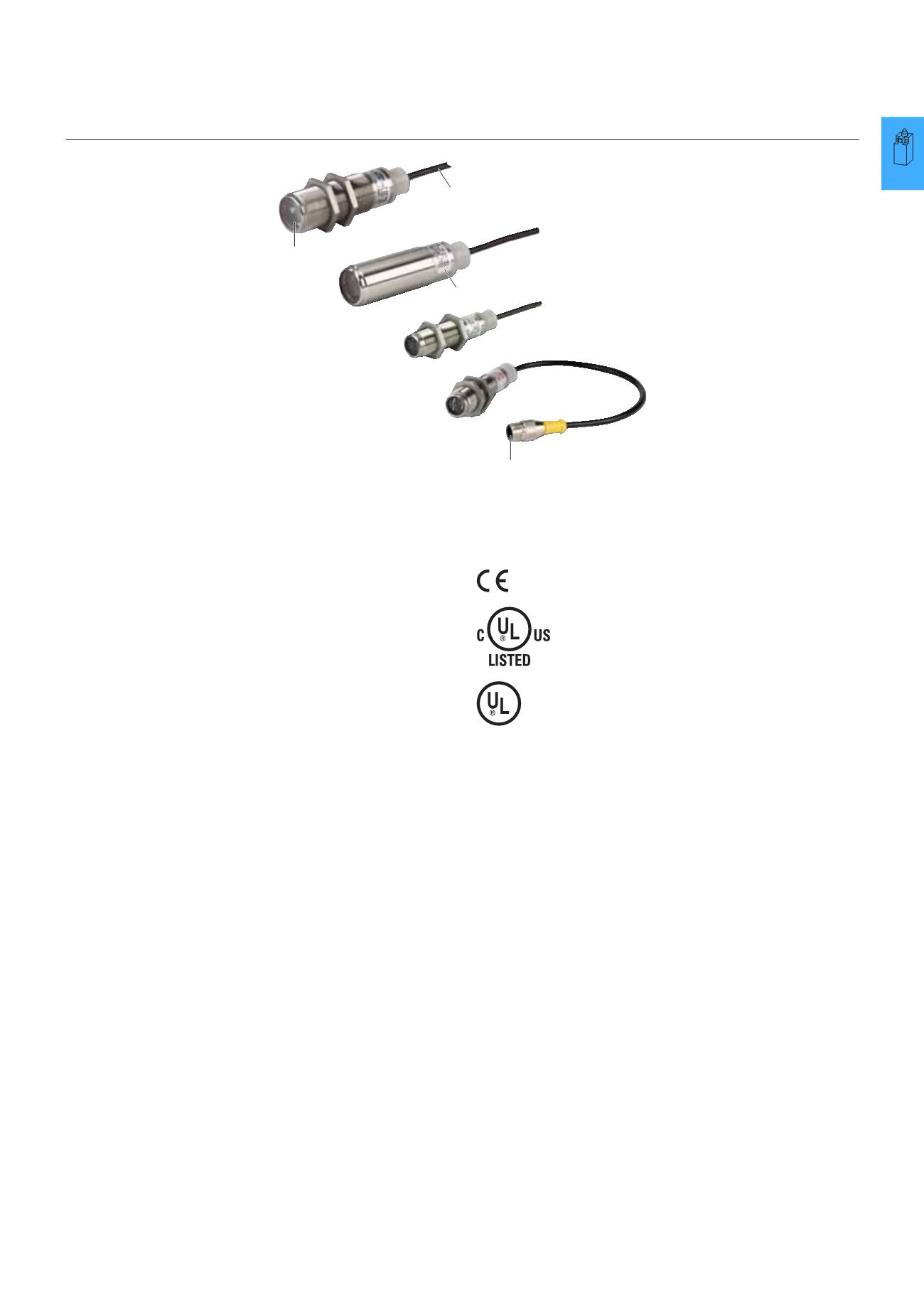
① Tempered glass lens cover protects against abrasion.
② Bright 360° function indicator.
③ All models with Visible red light.
④ All models available in versions with M12 (micro) plug connector.
b
c
a
d
Short description
Eaton’s E58 series was designed to
withstand the harshest physical,
chemical and optical environments.
Stainless steel, PVDF and tempered
glass components are mechanically
assembled using Viton® seals
to ensure complete sealing and
resistance to industry chemicals. All
adhesives and potting subject to
failure from chemical attack have
been eliminated from the design. The
result is a sensor highly resistant
to chemical attack and moisture
intrusion, that can withstand heavy
shock and vibration in almost any
application. E58 Harsh Duty sensors
feature unparalleled optical perfor-
mance. They are ideal for automotive
applications where exposure to
lubricants, cutting fluids, coolants
and glycols is common. For food
processing applications, a smooth
enclosure version simplifies high-
pressure chemical washdowns, and
withstands the use of sanitizers,
surfactants, and cleaning agents
including diluted bases and acids.
Product features
• Sensor with a diameter of 18 mm
and 30 mm.
• Highly refined optics for long
sensing ranges and to see through
high levels of contamination –
unmatched optical performance
• Perfect Prox® technology provides
exceptional background rejection
and extremely high excess gain.
• Resistant to the wide range of
chemicals used in the automotive,
food processing and forest products
industries
• Suitable for high temperature, high
pressure washdown (82 bar).
• Mechanical Viton seals hold up to
extreme temperature variations.
• Visible sensing beam on all models
lets you see where the beam is
aimed for quick flush mounting and
alignment.
• Output status indicator is the
brightest available and is visible
from any angle and in any illumina-
tion condition
• The industry’s only background
rejection sensors with a 2-wire
circuit design
• Four-wire DC sensors feature an
NPN and a PNP output
Approvals