



 81 / 300

Furse, Wilford Road, Nottingham, NG2 1EB • Tel: +44 (0)115 964 3700 • Email:
enquiry@furse.com• Web:
www.furse.comEarth electrodes
TSC-0912 - 09.10.12
Earth electrode materials
Quality earth rods are commonly made from either solid copper, stainless steel or
copperbonded steel.
Three types of Furse earth rod are available, but the copperbonded steel cored rod is by
far the most popular, due to its combination of strength, corrosion resistance, and
comparatively low cost.
Solid copper and stainless steel rods offer a very high level of corrosion resistance at the
expense of lower strength and higher cost.
Diameter of rod
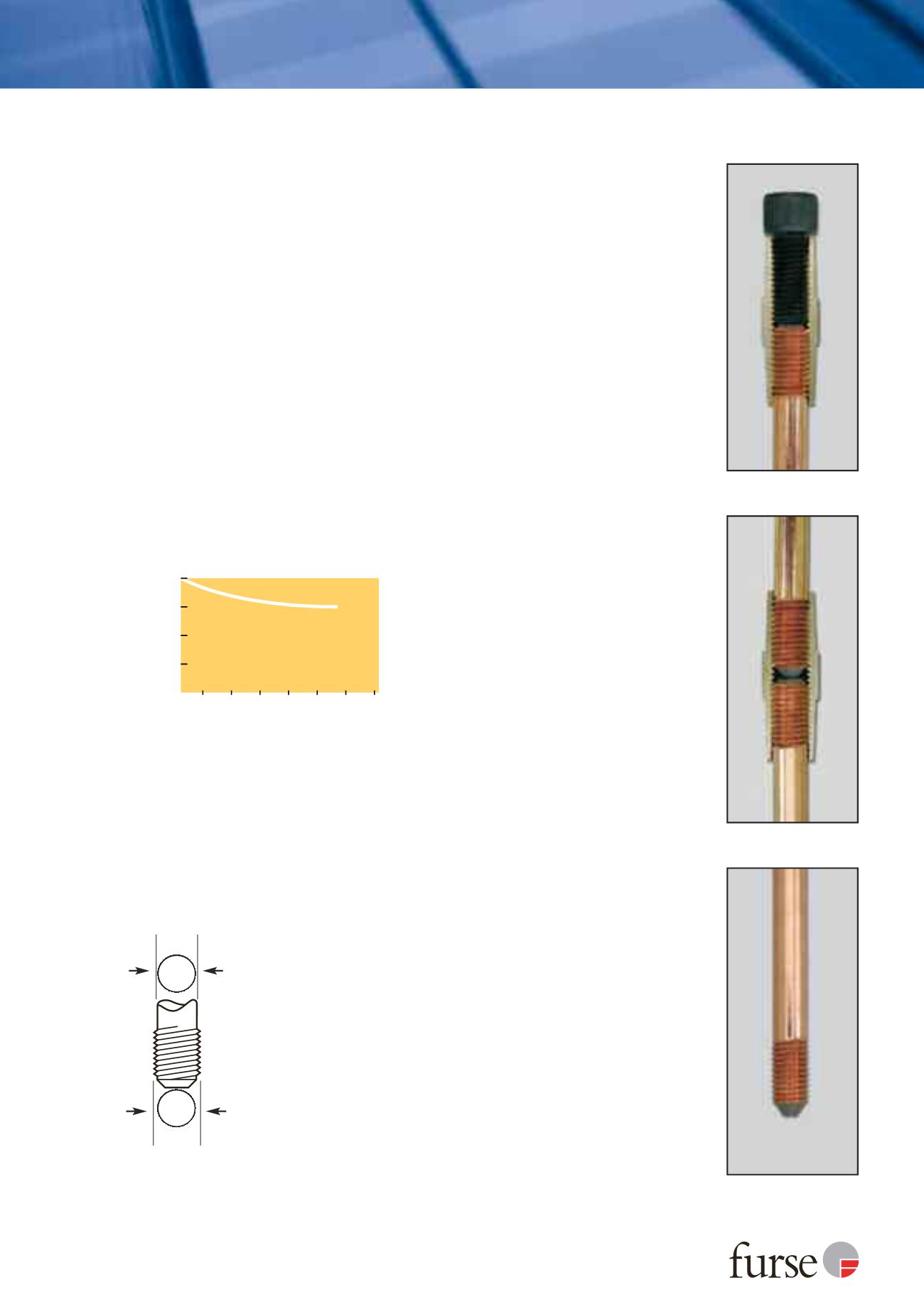
One common misconception is that the diameter of the rod has a drastic effect on
lowering earth resistance. This is not true! As the graph shows, you only lower the
resistance value by 9.5 per cent by doubling the diameter of the rod (which means
increasing the weight and the cost of the rod by approximately 400 percent!)
Thus the rationale is: Use the most economical rod that soil conditions will allow
you to drive. This is one of the ways to ensure that you don’t waste money on
over-dimensioned rods.
Thread and shank diameters
Confusion often arises between thread and shank diameters for threaded rods.
The thread rolling process, used by quality rod manufacturers, raises the surface of the rod
so that thread diameter (B) is greater than shank diameter (A) (see drawing).
All threads are Unified National Coarse (UNC-2A).
Resistance %
100
80
60
40
Rod diameter
2
”
1
3
⁄
4
”
1
1
⁄
2
”
1
1
⁄
4
”
1
”
3
⁄
4
”
1
⁄
2
”
A
B
Effect of electrode diameter on resistance