



 78 / 300

Furse, Wilford Road, Nottingham, NG2 1EB • Tel: +44 (0)115 964 3700 • Email:
enquiry@furse.com• Web:
www.furse.comEarthing
Product selector
An effective earthing system is a fundamental
requirement of any modern structure or system for
operational and/or safety reasons. Without such a
system, the safety of a structure, the equipment
contained within it and its occupants are compromised.
Earthing systems typically fall into (but are not limited
to) one of the following categories:
Power generation, transmission and distribution
Lightning protection
Control of undesirable static electricity
Telecommunications
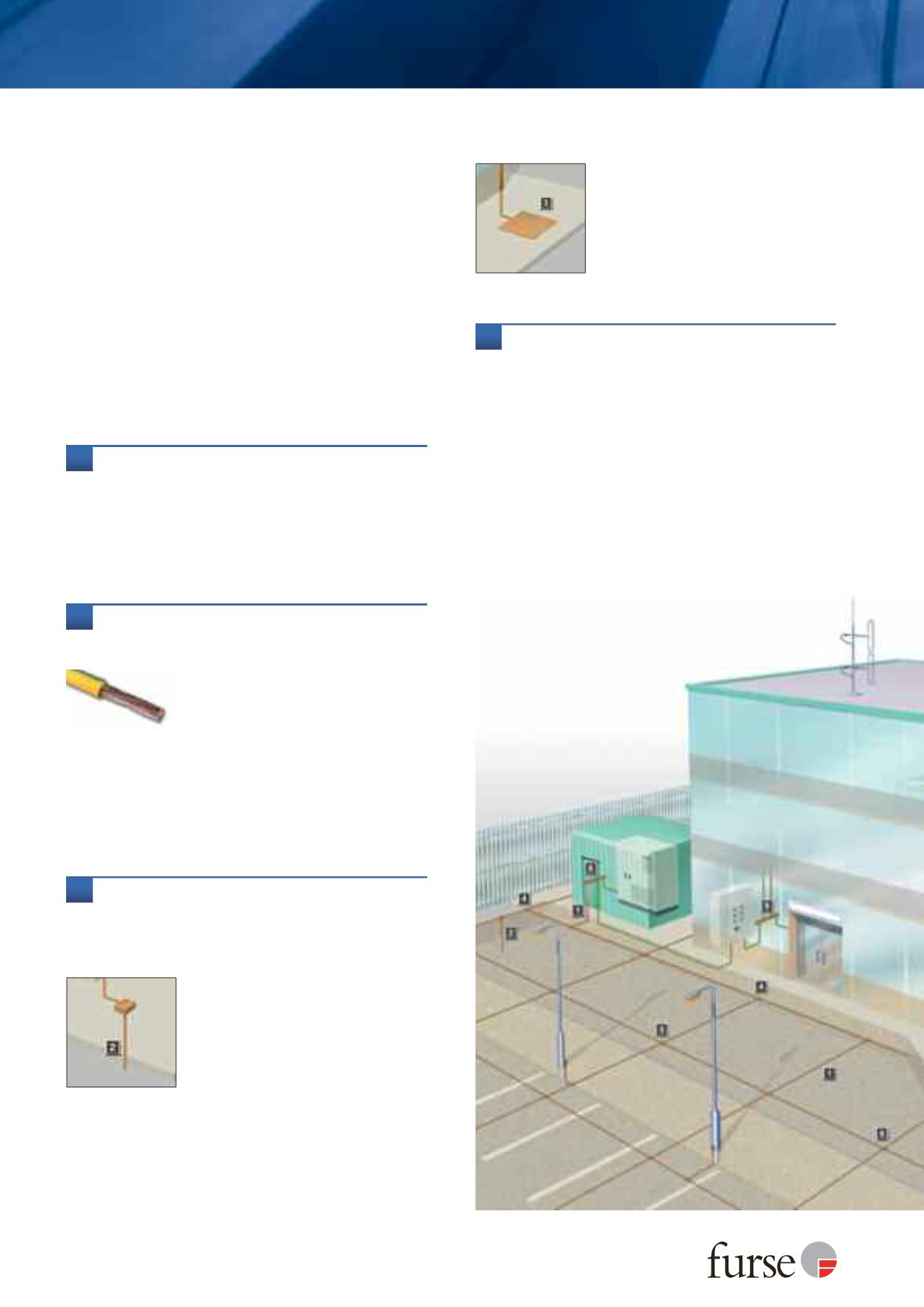
The following schematic illustrates the key elements of
an effective earthing system.
Conductors and Earth rods
As with lightning protection, the first choice faced by
the designer of an earthing system is the type of
conductor to be used. The correct choice of conductor
is extremely important, whether it be a simple below
ground electrode or a complex computer room signal
reference grid.
Conductors
We offer three types of conductor: flat tape, solid
circular and stranded cable.
A range of conductor materials is
available. Above ground, copper,
aluminium and steel may be used.
Below ground, copper is the most
common choice due to its high resistance to corrosion.
It is important that earthing conductors should
be correctly sized for their application, as they
may be required to carry a considerable current for
several seconds. Specific data regarding conductor
ratings can be found on page 28.
Earth rods and plates
In addition to the conductors outlined above, earth
rods and plates or any combination thereof can be
used to achieve an effective earth depending on the
site conditions.
Earth rods take advantage of
lower resistivity soils at greater
depths than normal excavation
will allow.
Earth plates are used to attain an
effective earth in shallow soils
with underlying rocks or in
locations with large amounts of
buried services. They can also
provide protection at potentially
dangerous places e.g. HV
switching positions.
Connectors and terminations
An effective earthing system relies on joints and
connections to have good electrical conductivity with
high mechanical strength.
Poorly chosen or badly installed joints and connectors
can compromise the safe operation of an earthing
system.
We offer a range of connectors and termination
methods to suit a wide range of applications.
This illustration is designed to demonstrate the main aspects and
individual components of an earthing system. It is not intended to
represent an actual scheme conforming to a particular code of
practice. The drawing is not to scale.