



 174 / 300

Furse, Wilford Road, Nottingham, NG2 1EB • Tel: +44 (0)115 964 3700 • Email:
enquiry@furse.com• Web:
www.furse.comTSC-0912 - 09.10.12
When & where to protect
Protect data lines locally
Generally, the biggest risk to data, signal, telecom and
network wiring is associated with cables that enter and
leave the building.
These should always be protected. However, data
cables within a building can additionally have
transients induced on to them when loops between
data and power cables “pick up” voltages from the
magnetic field caused by a lightning strike.
As part of the overall SPM, BS EN/IEC 62305 advocates
the use of metal in the structure, and a Faraday cage
lightning protection system to help exclude magnetic
fields.
Cable management practices eliminate loops by
routeing data and power cables along the same
general path.
In these cases, the need for local data line protection is
minimal. However, where these steps are not possible,
data line protection, local to the equipment requiring
protection, should be considered.
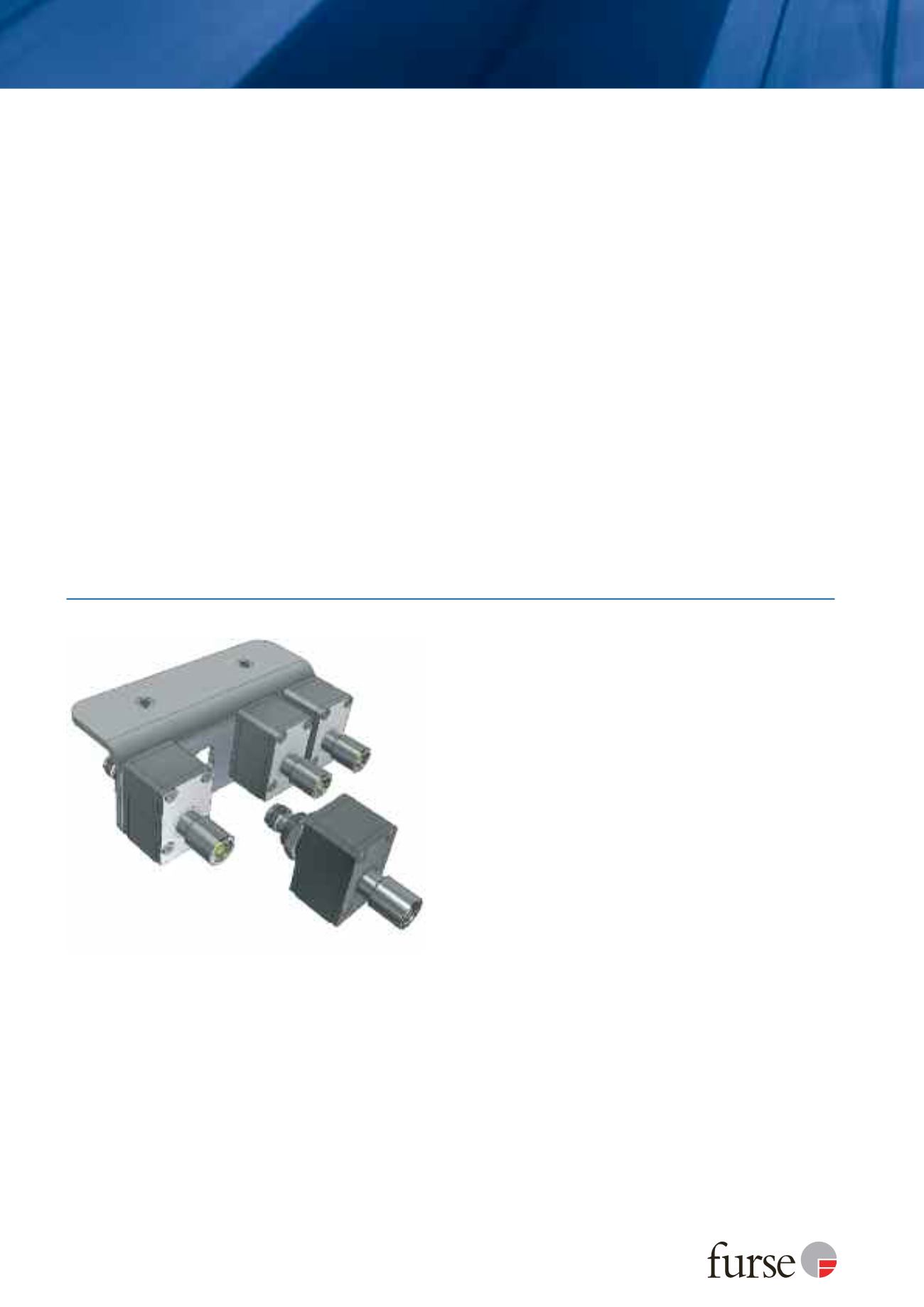
Special product development
Whilst this catalogue focuses on our standard product
range which meets a wide variety of applications, on
occasion a customer will have a special requirement
which needs transient overvoltage protection.
In these circumstances we have the technical capability
in-house to design and propose a specific solution to
meet the customer’s special requirement.
Following our proposal, technical and performance
parameters of the SPD can be finalised, and the special
product manufactured to order.
Special products completed to date include:
Low-current supply protection to industrial
microwave ovens
Media distribution protection (TV/Radio/DAB on
19” rack)
Integrated photovoltaic inverter protection
Overvoltage disconnect for battery-charger
installations within substations
For more information about special product
development, or to discuss a particular project,
please contact us.
Protect electronic equipment outside
the building
Onsite or field-based electronic equipment with mains
power, data communication, video, signal or telephone
line inputs will need to be protected against transient
overvoltages. It may be helpful to think of each
equipment cabinet or cubicle as a separate building
with incoming/outgoing cables to be protected.
Complementary techniques
As well as the use of transient overvoltage protectors,
BS EN/IEC 62305 outlines additional protection
techniques (e.g. shielding measures), which can be
used to help reduce the transient threat as part of the
overall SPM.
These are described further in the Furse Guide to
BS EN 62305 Protection Against Lightning. Where
these can be used, principally on new build or
refurbishment projects, they need to be supported by
the use of SPDs.