



 169 / 300

Furse, Wilford Road, Nottingham, NG2 1EB • Tel: +44 (0)115 964 3700 • Email:
enquiry@furse.com• Web:
www.furse.comRemote or indirect lightning flashes near the
structure (Source S2) or near a connected service
to the structure (Source S4) of up to 1 km radius
away (and hence far more common) are represented
by the 8/20 µs waveform.
Induced surges from direct lightning flashes and
switching sources are also represented by this
waveform.
With a much shorter decay or fall time relative to the
10/350 µs waveform, the 8/20 µs waveform presents
significantly less energy (for an equivalent peak
current) but is still devastating enough to damage
electrical and electronic equipment.
Damped current
waveshape
(8/20 µs)
Ground Level
Structural
LPS
10/350 µs
surge current
(
I
imp
)
Ground Level
8/20 µs
surge
current
Ground
Level
Induced Surges/
Overvoltages
8/20 µs surge current Strike up to 1 km away
8/20 µs
Ground Level
10/350 µs
surge current
(
I
imp
)
(
I
imp
)
2
(
I
imp
)
2
BS EN/IEC 62305-1 recognises that failure of internal
systems (Damage Type D3) due to Lightning
Electromagnetic Impulse (LEMP) is possible from all
points of strike to the structure or service - direct or
indirect (all Sources: S1, S2, S3 and S4).
To ensure continuous operation of critical systems even
in the event of a direct strike, SPDs are essential and
are suitably deployed, based on the source of surge
and its intensity using the Lightning Protection Zones
(LPZ) concept within BS EN/IEC 62305-4.
A series of zones is created within the structure
according to the level of threat posed by the LEMP
with each zone to have successively less exposure to
the effects of lightning - for example LPZ
0
A
(outside
the structure) where the threat of lightning currents
and fields is most severe being more onerous than
LPZ 3 (within the structure) where the threat of
lightning is considerably reduced such that electronics
can be safely located within this zone.
Lightning currents as a result of direct lightning strikes
are represented by the simulated 10/350 µs waveform
with a fast rise time and long decay that replicates the
high energy content of direct lightning.
Direct lightning can inject partial lightning currents
of the 10/350 µs waveform into a system where a
structure with a structural Lightning Protection
System (LPS) receives a direct strike (Source S1) or
where lightning directly strikes an overhead service
line (Source S3).
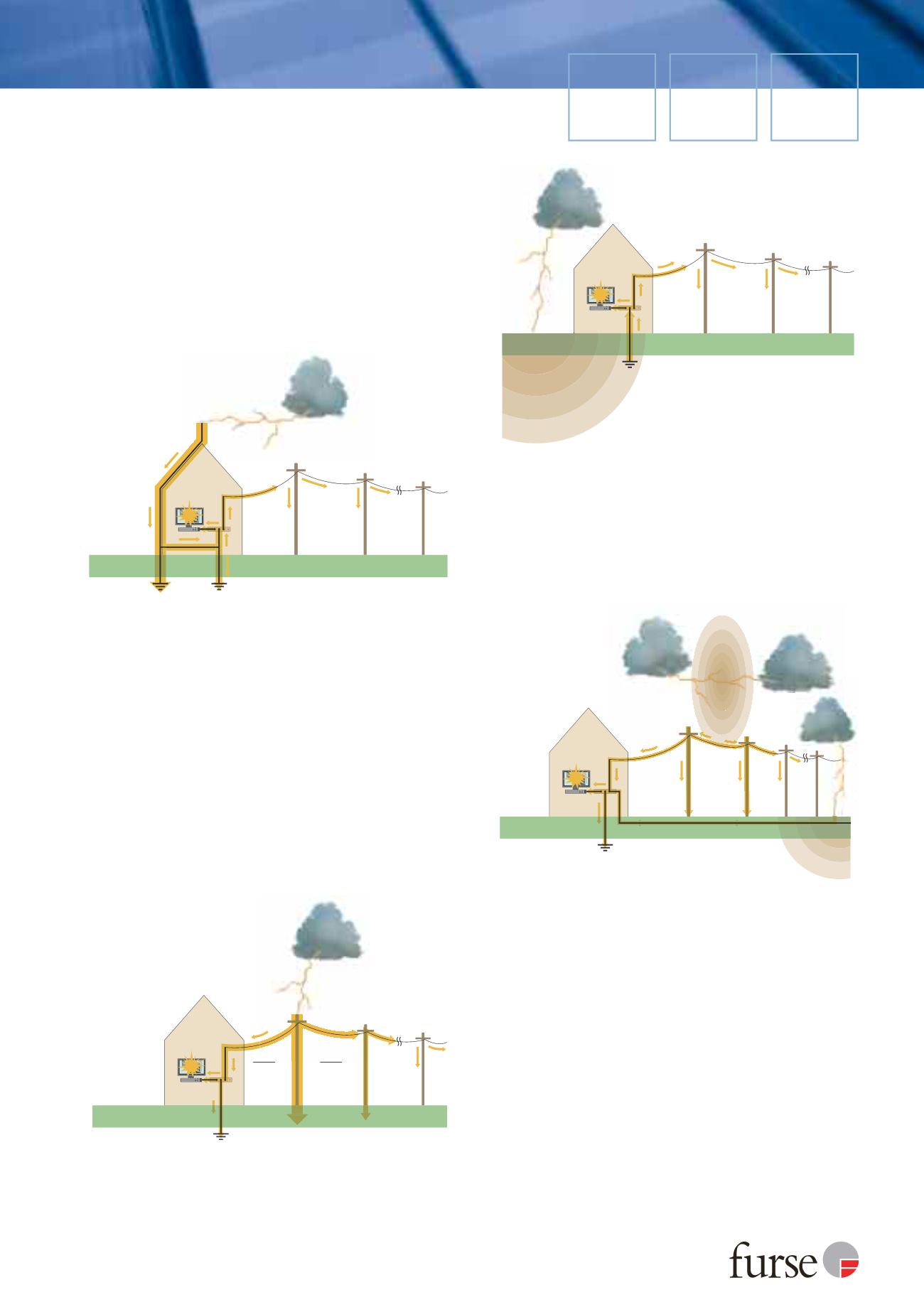
Figure 3: Illustration of lightning current flow from a direct strike to a
structure (Source S1)
Figure 4: Illustration of lightning current flow from a direct strike to a
nearby service (Source S3)
Figure 5: Illustration of lightning current flow from a direct strike near
the structure (Source S2)
Figure 6: Illustration of lightning current flow from lightning flashes
near connected services (Source S4)
TSC-0912 - 09.10.12