


 54 / 100

54
HAVELLS
Sensitive and critical equipment connected to the
electrical system must be protected against transient
overvoltages in accordance with BS EN 62305 and the
latest amendment to the IET Wiring Regulations,
BS 7671:2008 (+A1:2011).
Transient overvoltages are short duration, high magnitude
voltage peaks with fast rising edges, often described as a
‘spike’ or a ‘surge’, which can reach up to 6kV in a well-
insulated power distribution system (see Figure 1).
They are mostly caused by:
s )NDIRECT LIGHTNING ACTIVITY UP TO KM AWAY WHICH CAN
enter a building via connected metallic service lines
through resistive or inductive coupling (see Figures 2
and 3),
s 4HE ELECTRICAL SWITCHING OF LARGE INDUCTIVE LOADS E G AIR
conditioning units, lifts and transformers) within buildings,
or
s $IRECT LIGHTNING STRIKES WHERE PARTIAL LIGHTNING CURRENTS
in an external lightning protection system (LPS) or other
conductive parts attempts to flash over to internal metallic
installations
Transient overvoltages degrade and damage electronic
systems, leading to disruption, expensive downtime and fire/
electric shock hazard.
This can have severe consequences to life, to commercial
& industrial activity, and to the provision of critical
public services.
Degradation of Electrical equipment in the building, by
transient overvoltages begins from the point that the
susceptibility level of electrical equipment is exceeded (if
unknown, calculated as twice the peak operating voltage of
the electrical system, approximately 715V for 230V supplies).
Transient overvoltages affecting equipment susceptibility
occur on the active conductors, i.e. between phase and
neutral in the electrical system.
Outright damage is caused when transient overvoltages
exceed the equipment’s withstand voltage, typically 1.5kV
for sensitive equipment such as computers etc. The transient
overvoltages occur between the active conductors and the
protective conductor, i.e. phase/neutral to PE.
Transient overvoltage protection
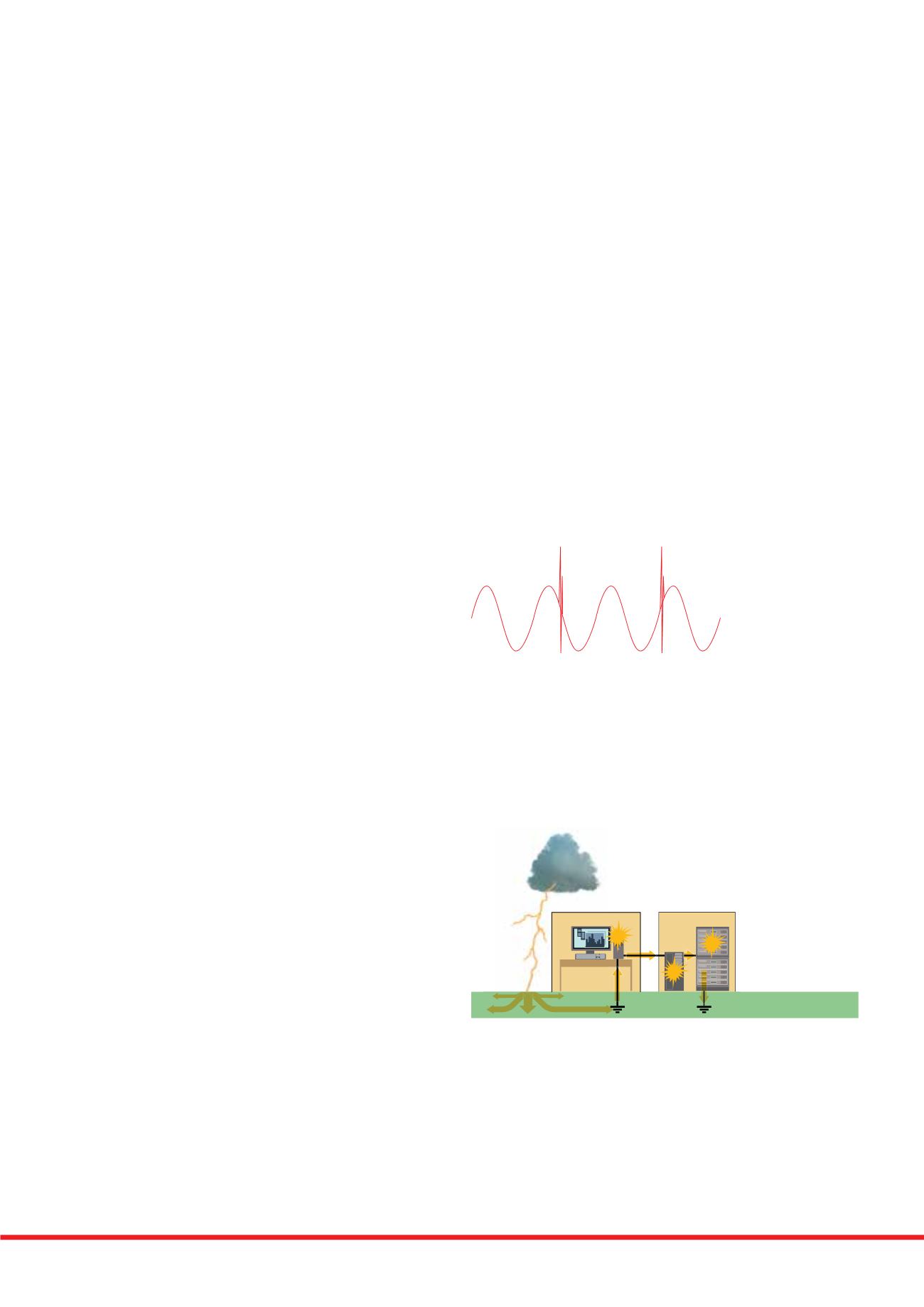
Figure 1: Example of a transient overvoltage ‘surge’
Much more frequent than direct lightning strikes, transient overvoltages
cause damage and long term degradation of electronic systems, leading to
costly downtime and disruption if these systems fail completely.
Transient overvoltages from indirect lightning can enter a structure via
connected metallic service lines (mains power or data communications
lines), as a result of resistive or inductive coupling (see Figures 2 and 3),
where these metallic services are not protected by SPDs.
Figure 2: Resistive coupling
A nearby lightning strike injects a massive current into the ground.
The current flows away from the strike point – preferentially through
the path of least resistance.
Earth electrodes, electrical cables and the circuitry of the electronic
equipment (once damaged), are all better conductors than soil.
Partial lightning current therefore channels through the structure via
separate earths, and as the current attempts to flow, devastating transient
overvoltages occur across the sensitive components of the equipment.
Protection against transient overvoltages is vital for
sensitive and critical electrical equipment, and is achieved
in accordance with BS 7671 and BS EN 62305 through the
installation of Surge Protective Devices (SPDs).
Surge protection within the Havells PowerSafe Distribution
board range has been optimized through testing with
Furse
®
. The combined solution achieves the lowest
possible let through voltage and removes many of the
installation variables associated with SPD’s. Uniquely, the
Havells / Furse
®
solution provides a tested level of system
performance at the Distribution board.
This SPD solution achieves the only proven installed
protective performance below equipment susceptibility level
available today.