




 22 / 28

22
HAVELLS
Selection
30 mA
A 30 mA RCD will provide a high degree of protection
against electrocution in an accidental shock hazard
RHST@SHNM 3GD BTQQDMS kNVHMF SGQNTFG GTL@M ANCX BNTKC AD
between 80 mA and 240 mA depending on the resistance of
the human body and the voltage across it.
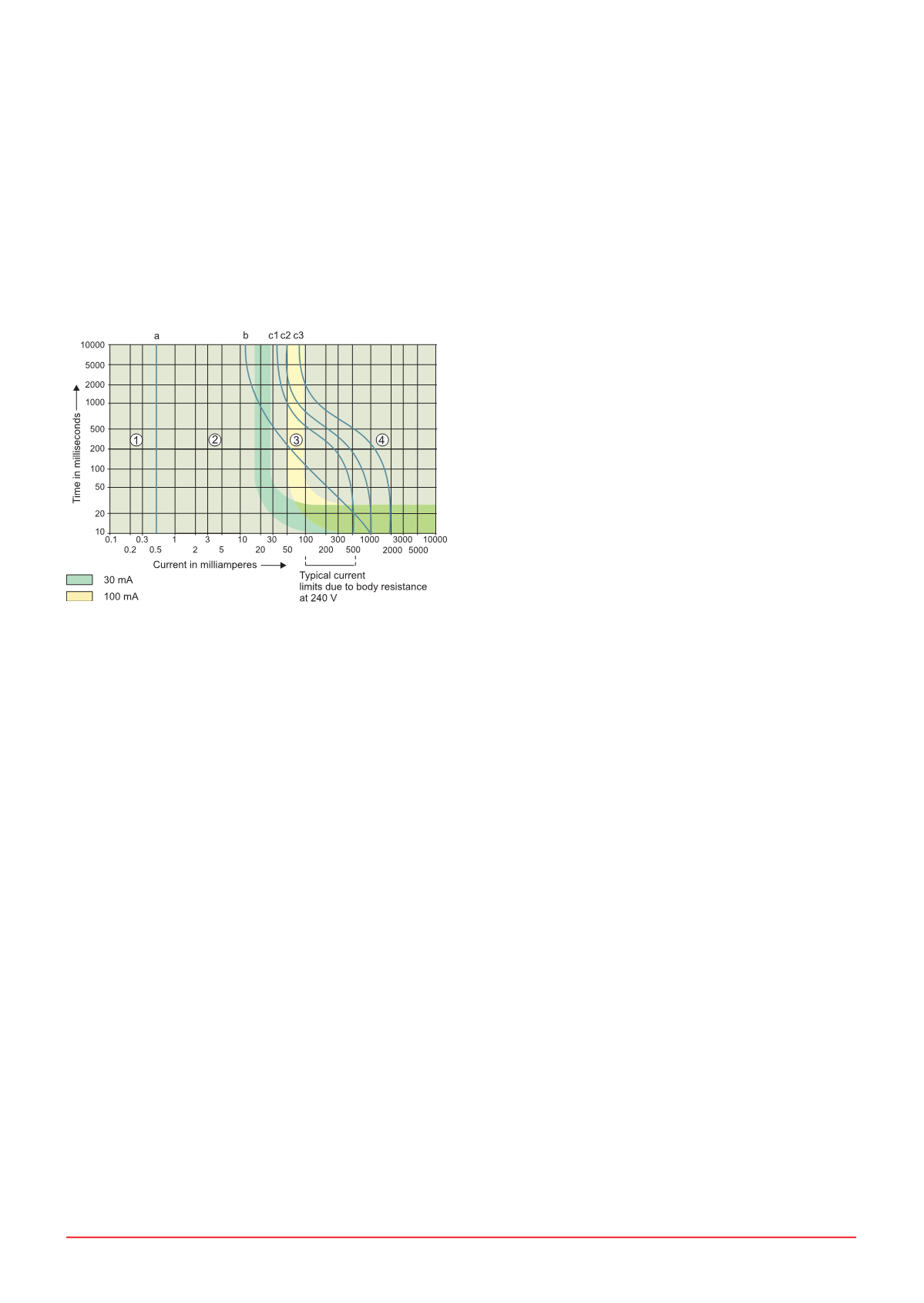
Zone
Physiological Effects
Zone 1 Usually no reactions
Zone 2 Usually no harmful physiological effects
Zone 3 Usually no organic damage to be expected.
+HJDKHGNNC NE LTRBTK@Q BNMSQ@BSHNM @MC CHEjBTKSX HM
breathing, reversible disturbances of formation and
conduction of impulse in the heart and transient
B@QCH@B @QQDRS VHSGNTS UDMSQHBTK@Q jAQHKK@SHNM
increases with current magnitude and time.
Zone 4 In addition to the effects of Zone 3, probability
if ventricular fabriliation increased up to 5%
(curve C2) up to 50% (curve C3) and above 50%
beyond curve C3. It increases with magnitude
and time, and pathophysiological effects such as
cardiac arrest, breathing arrest and heavy burns
may occur.
To be within zone of the IEC curve as shown. It is necessary
for the RCD to operate within 50 ms at 240 mA and 150ms at
L !NSG SGDRD BNMCHSHNMR @QD R@SHRjDC AX L 1"#
For households, individual outlets, wet areas and temporary
installations, RCD with sensitivity not exceeding 30 mA
is advisable.
100 mA
A 100 mA RCD will normally give a high degree of protection
against electrocution but there is a possibility that the shock
current could fall below the tripping level of RCD. This could
occur if additional resistances to that of human body are
included in the earth path.
The 100 mA RCCB protects against leakage currents and
indirect contact with earth loop impedance up to 500 Ohms.
300/500 mA
L 1"# L@X AD TRDC VGDQD NMKX jQD OQNSDBSHNM
is required. eg., on lighting circuits, where the risk of electric
shock is small. 300/500 mA RCD will not give any protection
against electrocution.