



 246 / 327

Tel
+44 (0)1424 856600
Fax
+44 (0)1424 856611
Technical Hotline
+44 (0)1424 856688
TECHNICAL INFORMATION
Technical information
Data Cable type Frequency
Speed
Notes
Cat5e
Upto100MHz
Upto1000MBps
Cat5ehas its limitationsandwillnot
beabletosupportemerging10GBase-TEthernet
Cat6
Upto250MHz
Upto10GBps
Cat6willrunatamuchhigherperformancethanCat5e
supportingmorethandoublethespeedandfrequency,
runningtoamuchtighterspecification.
Cat6a
Upto500MHz
Upto10GBps
Cat6a isdesignedtosupport10GBase-Tovera
maximumdistanceof100metres.
Cat7
Upto600MHz
Upto10GBps
Cat7andCat7adatacablesareshielded includingboth
the individualcablesandtheoverallcables
beingscreened.
Cat7a
Upto1000MHz
Upto10GBps
246 |
Data Compliant Trunking
Conductor type
Size
Cable factor
Stranded PVC power
1.5mm²
8.0
Stranded PVC power
2.5mm²
11.9
Stranded PVC power
4.0mm²
16.6
*Data cable
Ø5.5mm 23.8
*Data cable
Ø6.0mm 28.3
*Data cable
Ø6.5mm 33.2
*Data cable
Ø7.0mm 38.5
*Data cable
Ø8.4mm 55.4
Power and data segregation
It is important when installing power
and data cables in the same installation
that the installation complies with the
relevant standard. If any conflicts in
separation distances arise then the
greater separation distance must
always apply.
To comply with the correct separation
distance between power and data
cables please refer to BS EN 50174-
2:2009+A2:2014 section 6.
There are a number of factors that will
affect the separation distance of power
and data cables these are listed below:
• Total number of power circuits
• The total load on the power circuit
• The type of data cable being installed
• The installation method of the power
and data cables
Every installation is different so it is
important to refer to the installation
standard for each installation to ensure
compliance.
Types of data cable –different
categories of cable
Data cables are classified in a number
of different categories such as Cat 5e
and Cat 6 etc. Generally speaking the
higher the category number the higher
the performance specification. Data
cable is backwards compatible so a
Cat 6 installation will always perform
to a higher specification than a Cat
5 installation. The basic principle of
data cable is very similar across all the
different categories and is based on 4
pair twisted cable which is shielded to
protect from external EMI and alien or
cross talk interference from adjacent
cables.
45% Cable capacity
It is important to follow the Wiring
Regulations when installing cables in
trunking. By following the Wiring
Regulations you minimise the potential
of heat rise and cable damage and
maintain data throughput when
installing new circuits. For further
information on trunking cable capacity
and grouping factors please refer to
the latest BS7671 Wiring Regulations.
Technical Information
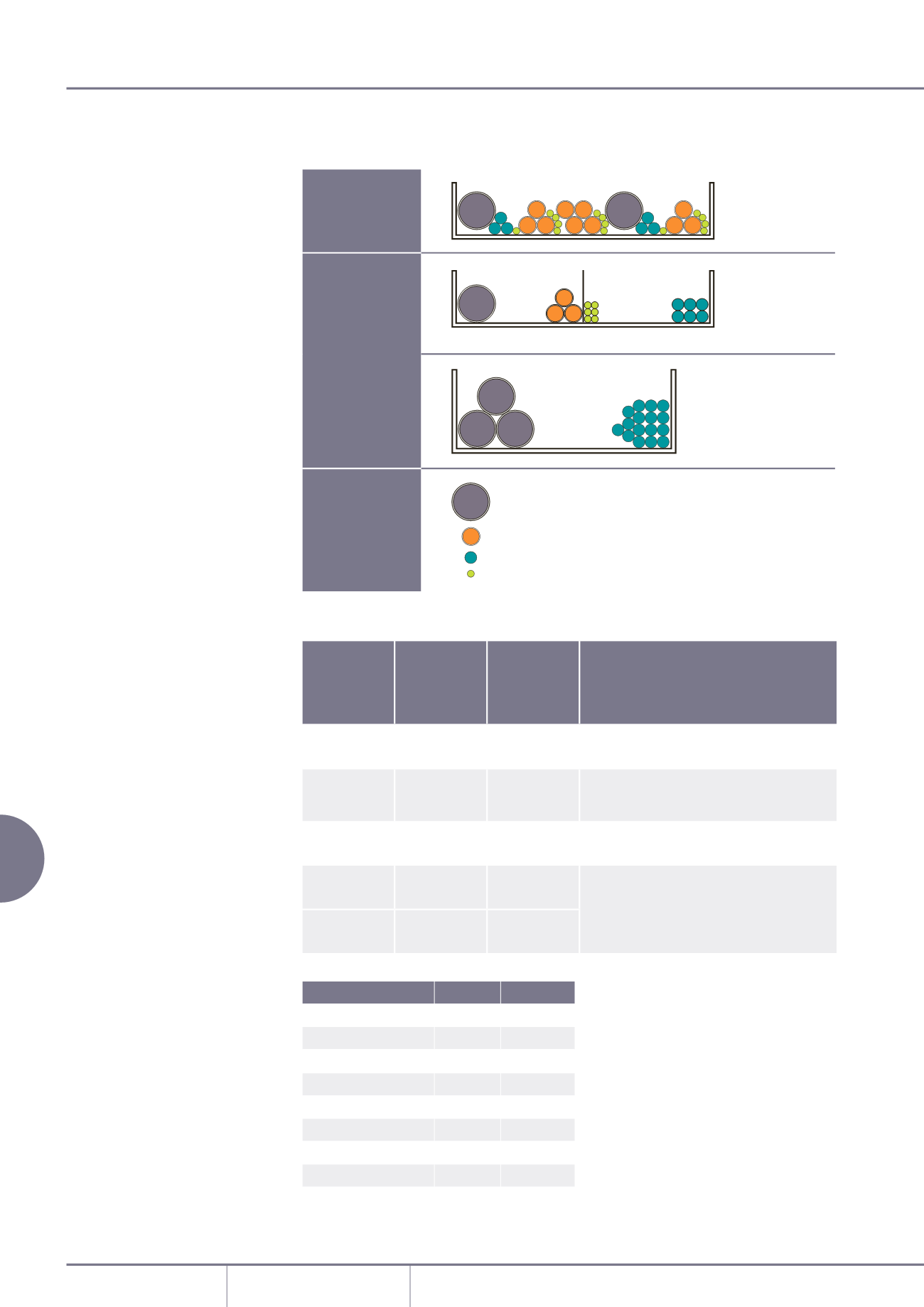
Understanding segregation methods
Data cable comparison table
Incorrect installation
Correct installation
Key
All cables installed in
same compartment
with no separation.
Cables separated by
means of physical barrier
in accordance with BS EN
50174-2:2009+A2:2014
section 6
Cables separated by
minimum distance in
accordance with BS EN
50174-2:2009+A2:2014
section 6
Main Power
Fire Alarms
ICT (Infrastructure Cabling Technology)
Sensitive Circuits