


 259 / 274

259
+44 (0)1243 838999
Technical
100
90
80
70
60
50
40
30
20
10
0
% OF INSTALLED LIGHT
Additionalpower
suppliedto
maintain light
level
LEVEL OF LIGHT PERFORMANCE
30,000
15,000
20,000
25,000
0
10,000
5000
Maintained light level
L70
HOURS USAGE
65% ARTIFICIAL LIGHT
35% NATURAL DAYLIGHT
50% ARTIFICIAL LIGHT
50% NATURAL DAYLIGHT
OPTIMUM LIGHT LEVEL
100
90
80
70
60
50
40
30
20
10
0
DAWN
DUSK
NOON
% OF REQUIRED LIGHT
LEVEL OF ARTIFICIAL LIGHT REQUIRED
LEVEL OF NATURAL DAYLIGHT
WITHOUT CONSTANT ILLUMINANCE
WITH CONSTANT ILLUMINANCE
HOURS USAGE
100
90
80
70
60
50
40
30
20
10
0
30,000
15,000
20,000
25,000
0
10,000
5000
LEVEL OF LIGHT PERFORMANCE
Light loss due to dirt accumulation
Cleaning
Loss of light due to ageing
Maintained light level
% OF INSTALLED LIGHT
L70
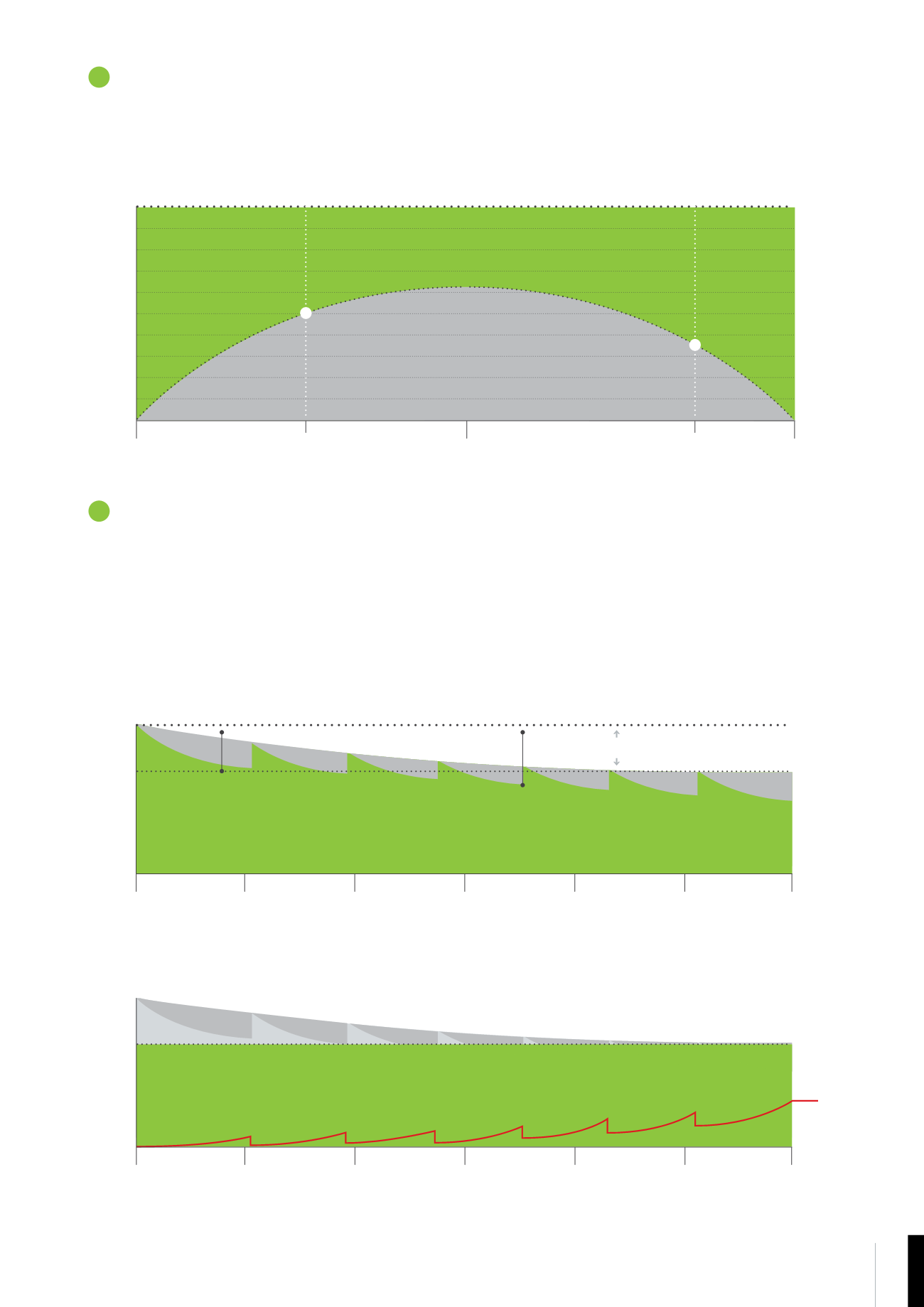
DAYLIGHT COMPENSATION
Harvesting
The cheapest and best form of lighting is natural daylight. Lighting controls can be designed to adjust the light output
from the light fittings when the amount of daylight in a room changes throughout the day and seasons.
CONSTANT ILLUMINANCE
Light fittings lose some of their brightness over time, measured as the time taken to lose 30% of the original light output
(L70). LED lights generally have a much better L70 performance than traditional lighting. If lighting controls are used then the
area can be maintained at the correct level (maintained level).
However, if controls are not used then the options available are to:
•
Initially over-light an area which will achieve the correct future lighting level, or
•
Initially light an area to the correct level and accept that in future the light level will deteriorate.
3
4