



 376 / 582

BETA Switching
Switching Devices
5
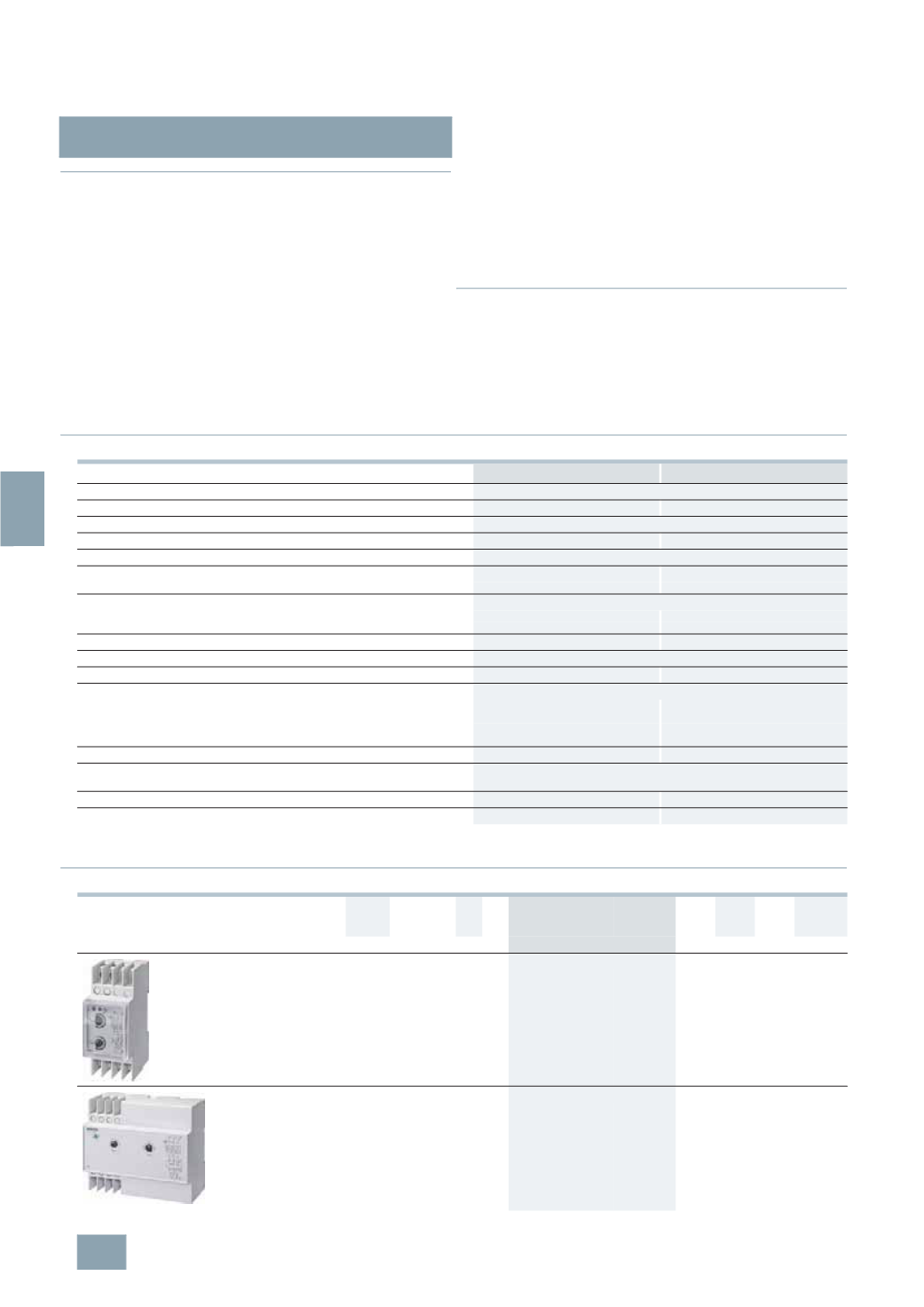
TT3 4 soft-starting devices
8/28
Siemens ET B1 · 10/2008
8
*
You can order this quantity or a multiple thereof.
■
Overview
The soft-starting device is an electronic control for the soft startup
of single-phase asynchronous machines. A phase control
causes the current to rise steadily. This also increases the motor
torque and the drive starts up smoothly. Because drive elements
are handled more gently they can be designed more cost-
efficient. As well as a considerable reduction in startup noise,
this also helps prevent the tipping or sliding of materials to be
transported. The starting current is minimized. There is no speed
adjustment. There is no marked soft start behavior without a me-
chanically connected load.
If the power semiconductor is to be protected against short circuits
or ground faults during startup, a super-quick fuse must be
installed. Otherwise, the usual line and motor protective measures
must be used. In the case of high switching frequencies, we
recommend installing a thermistor motor protection for monitoring
the permissible motor temperature.
The soft-starting device must not be operated with capacitive
load. In order to ensure the safety of persons and systems, only
qualified personnel should work on these devices.
To prevent losses in the device, the power electronics are
bridged with relay contacts after startup. Can be retrofitted in
existing plants at any time.
■
Benefits
•
On completion of startup, the power semiconductors are
bridged, which prevents overheating in the case of frequent
starting and inhibits premature wear and tear
•
Separate setting of ramp up time and starting torque enables
optimum adaptation to the mechanics
•
The LEDs for startup and continuous operation provide constant
information on the operating state.
■
Technical specifications
1)
For rated operational current.
■
Selection and ordering data
5
TT3 440
5
TT3 441
Standards
EN 60947-4-2 (VDE 0660-117)
Supply/motor voltage
V AC
400
230
Operating range
× U
c
0.8 ... 1.1
Rated power
VA
3.5
1.4
Rated frequency
Hz
50/60
Rated power dissipation P
v
Coil/drive
3.5
1.7
Contact
1)
per pole
4.6
0.7
Rated output of motor
-
Max.
At 400 V
VA
5500
1500
-
Min.
At 400 V
VA
300
100
Startup voltage
%
30 ... 70
20 ... 70
Starting ramp
s
0.1 ... 10
Recovery time
ms
100
200
Switching frequency
3
×
I
N
,
T
AN
= 10 s,
u
= 20 %
Switching
cycles/h
36 (
up to 3 kW)
10
3
×
I
N
,
T
AN
= 10 s,
u
= 20 %
Switching
cycles/h
20 (
from 3 ... 5.5 kW)
10
Semiconductor fuse
Super quick
A
35
20
Conductor cross-sections
Rigid
max. mm
2
2
× 2.5
Flexible, with end sleeve min. mm
2
1
× 0.5
Permissible ambient temperature
°C
-20 ...
+60
-20 ...
+55
Resistance to climate
Acc.to EN 60068-1
20/60/4
20/55/4
Version
U
e
P
c
MW DT Order No.
Price
per PU
PG PU PS*/
P. unit
Weight
per PU
approx.
V AC W
1
unit
Unit(s) Unit(s) kg
Soft-starting devices
Single-phase
230 100 ... 1500 2
B
5
TT3 441
027 1
1
0.135
Soft-starting devices, mounting depth 55 mm
Three-phase,
two-phase motor actuation
400 300 ... 5500 6
B
5
TT3 440
027 1
1
0.430
© Siemens AG 2008