




 10 / 22

Significant changes affect installations where cables are
buried in the wall. This is the normal practice in dwellings.
Although additional regulations relating to bathrooms etc are
not new, there are some important changes to consider.
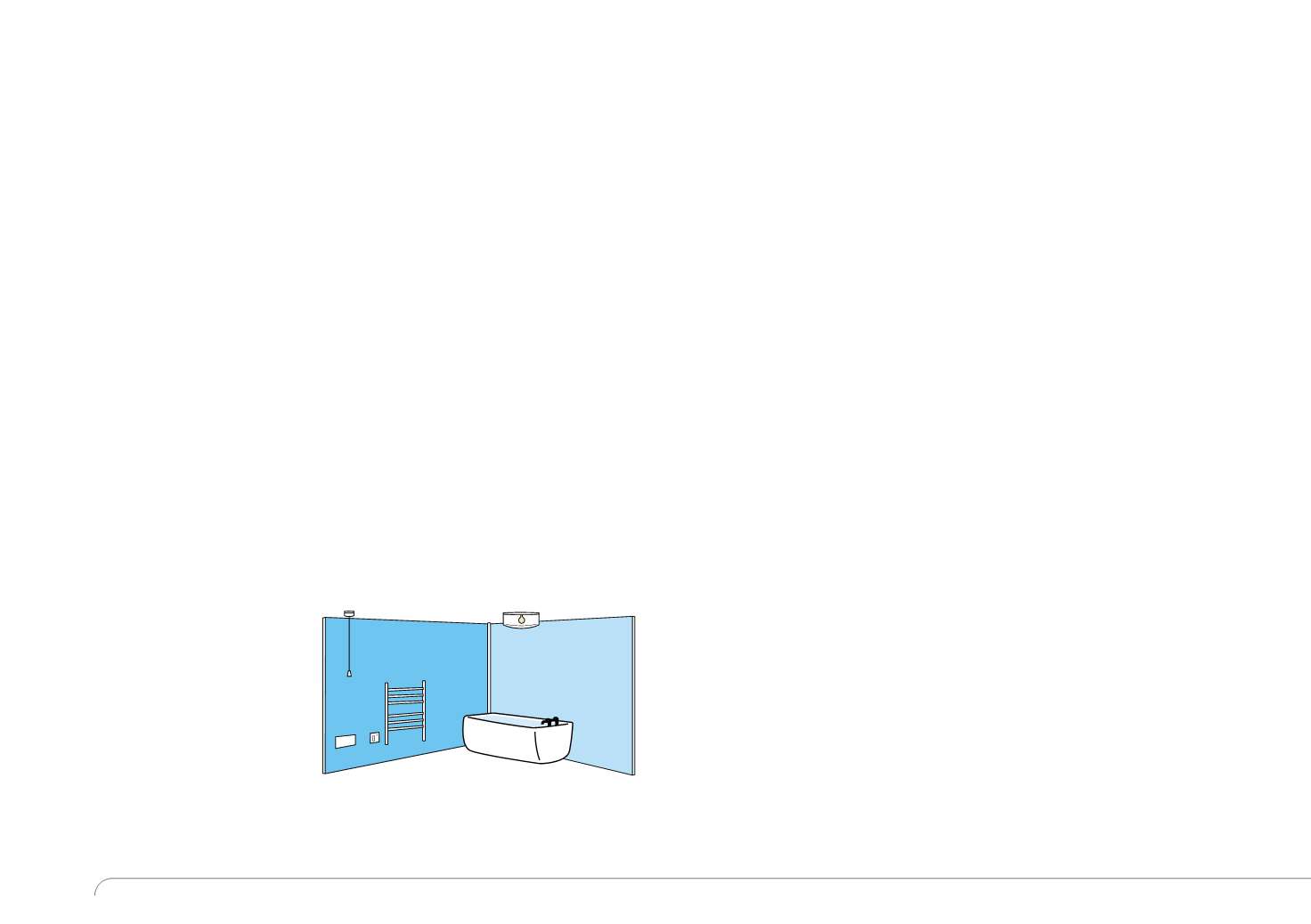
Regulation 701.411.3.3 requires that all circuits within this
location shall be additionally protected by an RCD not
exceeding 30mA. This would mean 230V lighting, the 230V
supply to the source for SELV, a shower circuit and bathroom
heater for example will all need RCD protection.
A standard 13A socket
outlet is now permitted
in this location provided
however the socket
outlet is more than 3m
from the boundary of
zone 1.
The 16
th
Edition required local supplementary bonding be
provided connecting together all exposed and extraneous
conductive parts in the zones. This is no longer required in
this location provided the following conditions are met:
•
All final circuits of the location comply with the automatic
disconnection requirements according to regulation
411.3.2.
•
All circuits are RCD protected in accordance with
701.411.3.3.
•
All extraneous-conductive parts of the location are
effectively connected to the protective equipotential
bonding according to regulation 411.3.1.2 (Previously
termed main equipotential bonding).
Section 701: Locations
Containing a Bath or Shower
Circuits in locations containing a bath or
shower should be protected by an RCD
Guide to
| 17
th
Edition Consumer Units
10
“All circuits in locations containing a
bath or shower shall be protected by an
RCD not exceeding 30mA”