



 534 / 582

Appendix
Glossary
15/8
Siemens ET B1 · 10/2008
15
Inrush current
Current peak when switching on transformers or switching mo-
tors on and off. Caused by electromagnetic transient reactions
(
inrush effect) when the magnetic field is set up. The current
peak can take the following values for motors at the rated
voltage:
On-switching:
I
max
=
I
on
* (1.8
to 2.0),
Star-delta time transfer:
I
max
=
I
on
* (2.1
to 3.7),
Reversing:
I
max
=
I
on
* (2.7
to 5.0).
With transformers, the inrush current (starting current) depends
on the design, version, winding construction, application, power
rating, etc. as r.m.s. value is approx. 15 to 30 times the primary
rated current.
The inrush current dies down very quickly and is considerably
smaller after just 20 ms.
Insulation monitoring
Measure that monitors the insulation resistance of an electrical
system of a measuring device of which neither an outer conduc-
tor nor a neutral point is directly grounded. Any insulation fault
that occurs is indicated or, if a second fault occurs, the electrical
system may be switched off.
Insulation resistance
The smallest resistance that is measured between components
that are insulated from each other – or between these and the
ground.
Let-through current
I
D
The largest instantaneous value of the current during the OFF
time of a switching device or fuse. Limited short-circuit currents
occur when the switching device, e.g. as result of resistance,
operating delay and peak arc voltage, lowers the amplitude of
the short-circuit current. The let-through current of a device (e.g.
current-limiting miniature circuit breakers) is decisive for the
thermal load (I²t-value) of downstream devices (current
limitation).
Live component
Conductive component of a device that is live under normal op-
erating conditions. This also includes the neutral conductor (N)
and conductive components that are connected to it. However,
this does not apply if the neutral conductor is also the PEN
conductor.
Load / current-using equipment
Devices or installations that convert electrical energy to another
non-electronic energy form. In the field of alternating current
technology, loads are divided into three categories:
•
Resistive loads that do not cause phase displacement be-
tween current and voltage in the system, e.g. heating, incan-
descent lamps.
•
Inductive loads that cause the current to lag behind the volt-
age, e.g. motors, coils, electromagnets.
•
Capacitive loads that cause the current to lead the voltage,
e.g. capacitors.
Loop impedance
The impedance of a fault loop is the sum of the impedances (ap-
parent resistances) in a current loop, comprising the impedance
of the power source, the impedance of the outer conductor from
one pole of the power source to the measuring point and the im-
pedance of the return conductor (e.g.protective conductor,
ground electrode and ground) from the measuring point to the
other pole of the power source.
Main circuit
Circuit that contains devices that generate, convert, distribute,
switch and pick-up electrical energy.
Making capacity
The value of the prospective starting current, which can switch
on a switching device under the prescribed conditions at a
specified voltage
Melting time
The time required to melt the fuse element of a fuse link, from the
start of the non-permissible overload current or short-circuit cur-
rent through to the start of the interruption process.
Meshed network
The meshed network is used to distribute energy over a cable
system with a network-like topology. The power is generally in-
fed over a number of points. If a cable fails, each load is auto-
matically fed (no need for switchover) over the remaining cable
branches (radial network, ring network).
Miniature circuit breakers
Mechanical switching device that serves to manually connect or
disconnect a circuit according to the mains and automatically
disconnect the circuit from the mains if the current exceeds a
specific maximum value.
In the event of the thermal overload of a connected load or
branch, a thermally delayed release initiates the switch-off pro-
cess. In the event of a short circuit, the instantaneous short-cir-
cuit release takes over disconnection. Both releases function in-
dependently of each other and protect each other. The release-
free mechanism of the miniature circuit breaker ensures that the
switch trips in the case of overcurrent and short circuit, even if
the actuating lever is jammed in one setting or is held in place
by an operator. In order to provide optimum branch protection,
the miniature circuit breakers are produced with several different
tripping characteristics (B, C and D).
Modular width (MW)
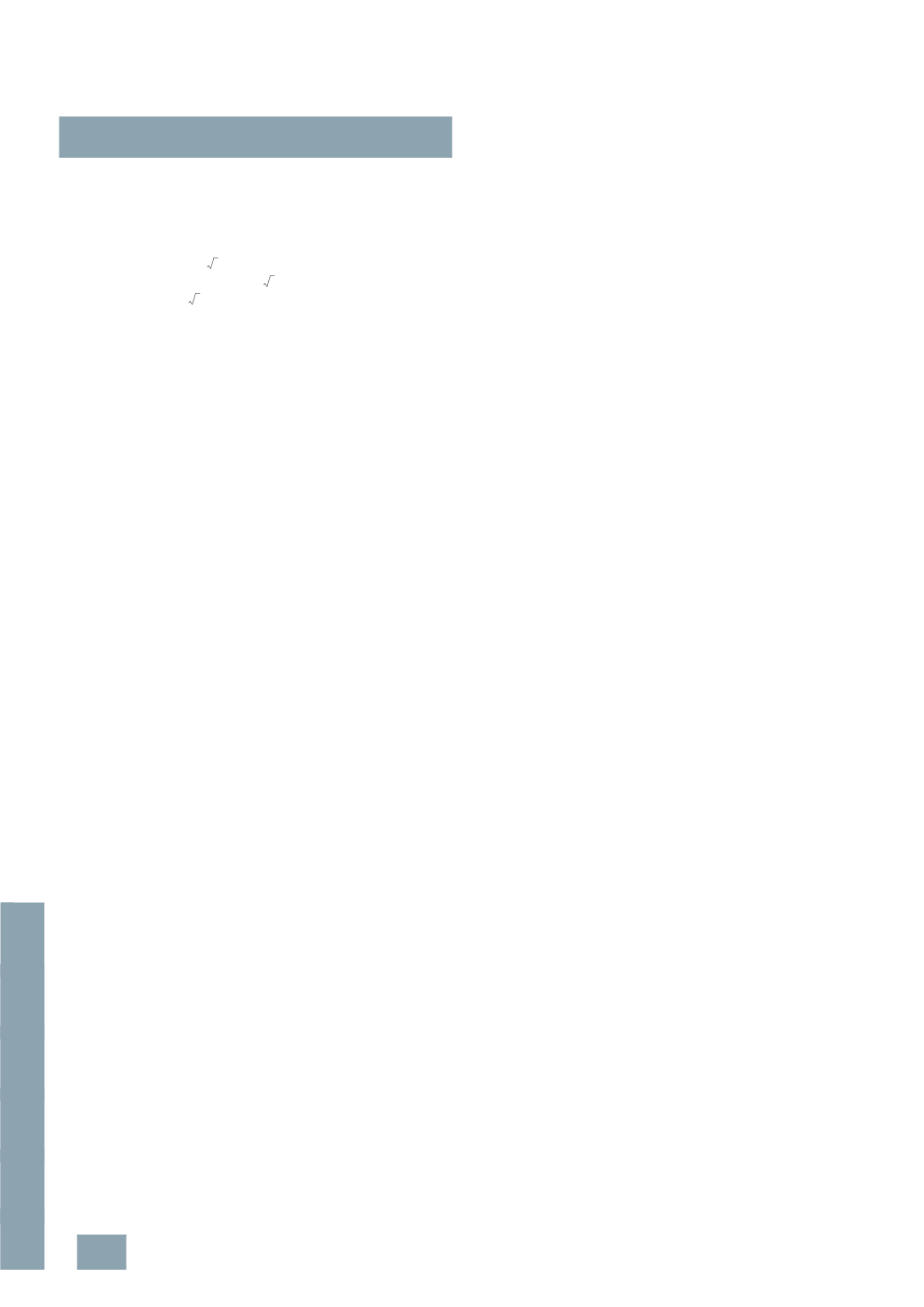
The width of modular devices is specified at n (
)
mm,
whereby n=0.5; 1.0; 1.5; 2.0; 2.5… is possible.
A modular width (MW) is 18 mm (17.5 + 0.5 mm) and the mount-
ing width n * 18 mm, available for modular devices. e.g. distribu-
tion boards.
Neutral conductor (N)
A conductor connected to the neutral or star point of the network
that is suitable for transmitting electrical energy.
N devices
Installation devices according to DIN 43830, with a mounting
depth of max. 55 mm.
N distribution boards
Small distribution boards according to DIN 43871 with a small
mounting depth for N devices up to 63 A.
No-load voltage U
0
Output voltage of an unloaded transformer at the rated input
voltage and rated frequency.
OFF time
Duration from the start of the command output to open a switch-
ing device through to the final extinguishing of the electric arcs
(
ON and OFF time).
ON or OFF time
Duration from the start of the command output to switch a
switching device ON or OFF until the current is flowing uniformly
in all poles, or is no longer flowing.
When connecting to a short-circuit current, the time that elapses
from the moment the response current of a release is reached to
the time when the electric arc is extinguished in all poles.
2
2
2
17,5
+0,5
-0
© Siemens AG 2008