



 3 / 18

MarshaLL-tuffLeX
3
features and bene ts
easy installation and Modi cation
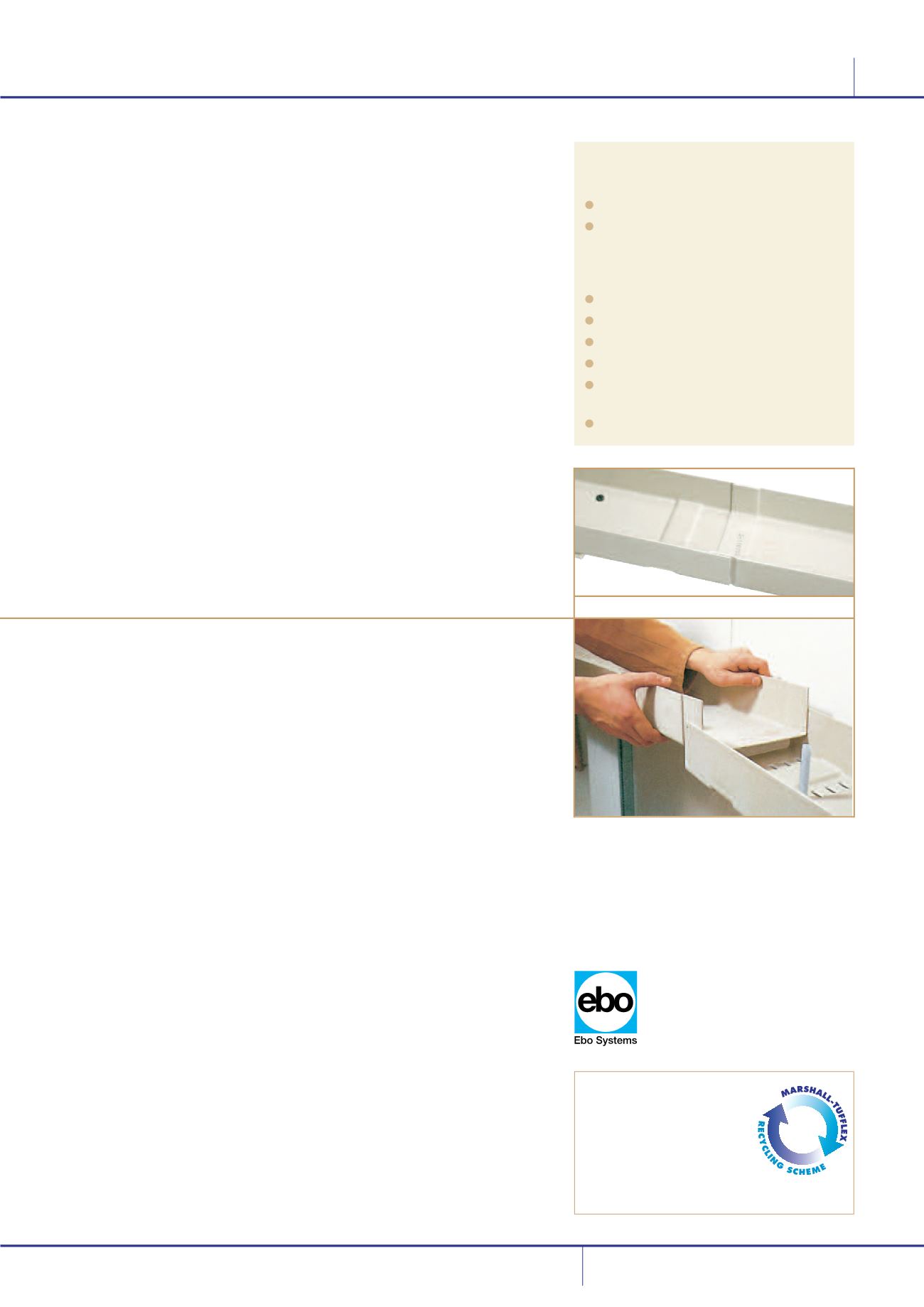
Lightweight and robust, with interlocking and self adjusting couplings to assist
assembly, GRP systems allow on-site installation and modification without the need
for special tools, de-burring, painting or earth bonding.
Low Maintenance
GRP products are corrosion resistant and can withstand extreme weather conditions,
salt and most chemicals without the need for painting and protective coatings.
fire security
Effective at temperatures between -80°C to +130°C, GRP has a low conductivity and is
a self extinguishing, Zero Halogen material that is low smoke classified.
insulating
Excellent insulating material resulting in high performance cable protection with no
earthing required.
Mechanical Properties
Loading characteristics in accordance with IEC 61537. For deflection values,
coefficient of safety and load calculations refer to page 14.
GrP Vs steel
GRP is 40% lighter
Completely corrosion resistant. No rusting
even when in contact with salt spray, H25,
acid built up from exhaust gases, or brake
dust along roads and railways
Fast installation with fewer fasteners
Easy to cut and drill
Slow rate of heat transfer
Earthing not required
Antimagnetic and therefore resistant to
electromagnetic pulses
Lower life cycle cost
recYcLinG
Marshall-Tufflex is active in and
financially supports various
industry bodies in driving the
industry forward in the use and
control of PVC-based materials,
with the aim of increasing
awareness and use of recycled material.
GRP Cable Management Systems are fully
compliant to the below standards and regulations
aPProVaLs
fire Behaviour
Inflammability to IEC 60695-2-12/ UL94
Spread of flame to BS 476 part 7 class 2/ ASTM E84 (Up to Class 1 on request)
Fire propagation to BS 476 Part 6
Smoke emissions to BS 6853 App B53
Fire standard to DIN 4102
Mechanical Behaviour
Breaking point to NEMA FG1
Tensile strength at break point to ISO 527-5
Modulus of elasticity to ISO 527-5
Accelerated ageing to ISO 4892-2
electrical behaviour
Surface resistivity to IEC 6079-0
Breakage voltage to IEC 60243-1
Comparative tracking index IEC 60112
density
to DIN 53479
Linear thermal dilatation
to DIN 53752
Water absorption
to ISO 62